Document translation without surprises
ProtoGloss translates books and long-form manuscripts with a cost estimate before you spend, a human review step, and a clean editable export. Built and evaluated on English and Persian literary work.

Good at sentences, bad at books
Machine translation has been good at sentences for years. Books are a different problem. Chapter twelve forgets what chapter two called the protagonist. A term of art is rendered three different ways in three different places. The file that comes back needs more editing than it saved, and the editing is the expensive part.
ProtoGloss is built for the long document rather than the paragraph. It extracts the structure of your manuscript, mines a glossary and a character bible you can edit before anything is translated, then carries that context and per-chunk memory forward through the whole book. You see an estimated cost before a single model call runs.
The result is not a finished book. It is a draft that stays consistent with itself across hundreds of pages, and a review workspace for the parts that still need a person.
What the workspace actually does
Glossary and character bible
Mined from your own text and editable before translation starts, so recurring names and terms are decided by you rather than guessed again in every chapter.
Memory across the whole document
Per-chunk memory and document-wide context carry forward, so chapter twelve still knows what chapter two decided.
A cost estimate before you spend
Every job shows an estimated cost and time before the first model call. You confirm, or you walk away.
Side-by-side review
Source and translation together, with inline editing and autosave, per-segment comments, and an issue and score panel.
Rework only what needs it
Improve the whole document, or just the segments that failed. Segment-level rework is the point of the review step.
Clean, editable DOCX
A semantic export with headings and lists recreated and correct text direction for the target language, built to go into a production pipeline.
Technical edit, not linguistic edit
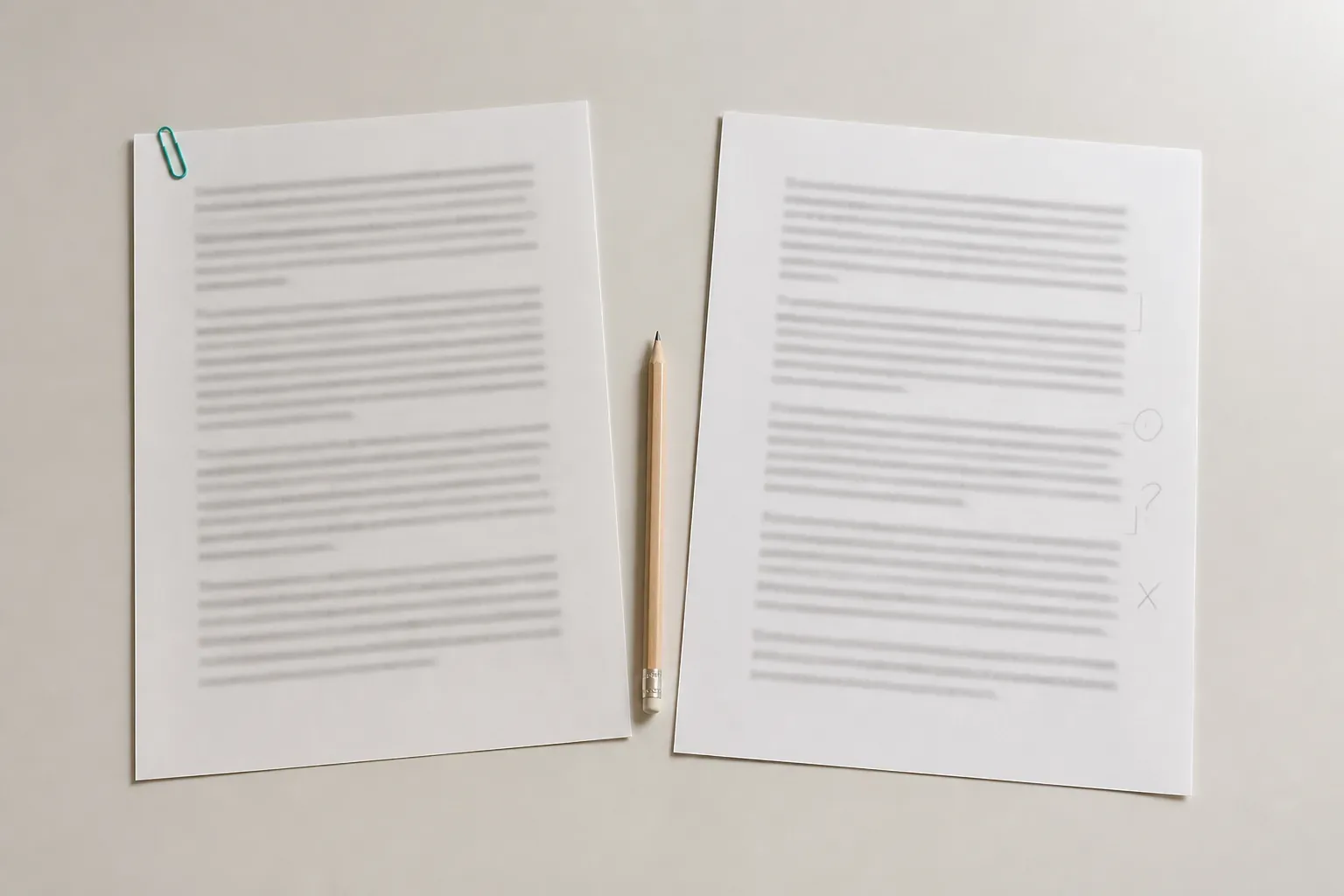
Publishers already have a phrase for the difference that matters. A human translator's draft needs a technical edit: formatting, consistency, the mechanical pass. Machine output needs a linguistic edit, which means rewriting for naturalness, idiom and voice, and that is where the cost actually sits.
ProtoGloss is built to reduce the linguistic edit load while keeping the technical and consistency checks measurable, through glossary coverage, name consistency and segment coverage. That is a narrower claim than most tools make, and it is the one we can stand behind.
You review segment by segment, fix what needs fixing, and export. Exactly two moments in the journey require a person: confirming the settings, and the review.
What ProtoGloss does not do
Scanned PDFs and images are rejected rather than guessed at. There is no OCR in the product, and a scanned book will fail with a clear message instead of quietly producing nonsense.
The export does not imitate the layout of your source file. It is a clean semantic document meant for a production pipeline, which for a publisher is usually the more useful of the two.
And we do not claim to beat a human translator. The claim is narrower and more useful: a consistent draft over a book-length job, with the editing effort measured rather than assumed.
Request an invite
Access is by invitation, and the first step is a free evaluation on a sample of your own material. Tell us what you are working on and what language pair you need.